WAEC 2026 Biology Practical Specimen (Full List) for Nigerians Candidate
Group I — Reproduction and Development
- Specimen A — Mature fresh eggs of catfish
- Specimen B — Fresh egg of domestic fowl (raw, with shell intact)
- Specimen C — Picture/model/chart of uterus containing a foetus
- Specimen D — Longitudinal section of ovary of Pride of Barbados flower
- Specimen E — Leaf of Pride of Barbados flower
Group II — Plants and Habitats
-
- Specimen F — Panicum plant / Guinea grass (whole plant)
- Specimen G — Cocoyam plant / Caladium plant (whole plant)
- Specimen H — Corm of Cocoyam
- Specimen J — Dry humus in a beaker
- Specimen K — Moist humus in a beaker
- Specimen L — Ripe orange fruit (whole)
Group III — Ecology and Pest Biology
- Specimen M — Bean weevil
- Specimen N — Bean seeds (with holes caused by weevil infestation)
- Specimen P — Waterleaf plant (whole)
- Specimen Q — Quill feather of a domestic fowl
- Specimen R — Pineapple fruit (longitudinal section)
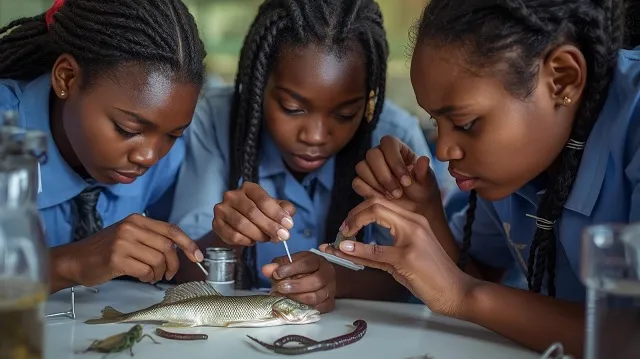
SECTION A: ANIMAL SPECIMENS
These are almost always included (one vertebrate + one insect/arthropod):
- Fresh fish (e.g., Tilapia or Mackerel)
- Grasshopper or Cockroach
- Earthworm (occasionally substituted)
- Snail (common alternative)
What WAEC tests here:
- External features
- Classification (Phylum, Class)
- Adaptive features
- Mode of locomotion
- Habitat
SECTION B: PLANT SPECIMENS
Typically one dicot leaf and one monocot leaf:
- Hibiscus leaf (Dicot)
- Maize leaf (Monocot)
- Alternative: Mango leaf / Cassava leaf
Focus areas:
- Venation (reticulate vs parallel)
- Leaf shape and structure
- Classification (Monocot vs Dicot)
- Comparative analysis (tabulation)
SECTION C: FRUITS / SEEDS
WAEC frequently includes fruit identification:
- Orange (Hesperidium)
- Tomato (Berry)
- Coconut (Drupe)
- Beans or Maize grain (Seed structure)
Tested concepts:
- Fruit types
- Seed structure
- Dispersal methods
- Economic importance
WAEC 2026 Biology Practical Specimen (Full List) for Nigerians Candidate
SECTION D: FOOD TEST MATERIALS
Almost guaranteed every year:
- Starch solution
- Glucose solution
- Protein solution (egg albumen or milk)
- Oil (for lipid test)
Required reagents:
- Iodine solution
- Benedict’s solution
- Biuret reagent
- Ethanol (for lipid test)
You must master:
- Procedure
- Observation
- Inference
SECTION E: ECOLOGY / FIELD EQUIPMENT
Common WAEC practical area:
- Thermometer
- Rain gauge
- Hygrometer
- Quadrat
- Measuring cylinder
Focus:
- Uses of instruments
- Environmental measurements
- Habitat concepts
SECTION F: MICROSCOPY / LAB APPARATUS
WAEC often includes microscope identification:
- Light microscope
- Hand lens
- Slides and cover slips
Tested skills:
- Parts and functions
- Magnification basics
SECTION G: GERMINATION / OSMOSIS EXPERIMENTS
Very common experimental question:
- Bean seeds (germination)
- Yam strips (osmosis setup)
- Distilled water vs salt/sugar solution
Key expectations:
- Observation
- Conclusion
- Biological principle (osmosis, diffusion)
VERY LIKELY 2026 COMBINATION (BASED ON PATTERN
A realistic WAEC setup for 2026 may look like:
- Specimen A: Fish
- Specimen B: Grasshopper
- Specimen C: Hibiscus leaf
- Specimen D: Maize leaf
- Specimen E: Orange or Tomato
- Specimen F–H: Food test samples
WHAT WAEC EXAMINERS STRICTLY MARK
Candidates in Nigeria lose marks due to these:
- Writing non-observable features
- Poor tabulation
- Incorrect classification levels
- Missing diagram labels
- Skipping Observation → Inference format
HOW TO PREPARE STRATEGICALLY
If you master these, you are fully covered:
- Fish vs Insect comparison
- Monocot vs Dicot leaves
- Food tests (very important)
- Fruit classification
- Basic ecology instruments
- Osmosis/germination experiments
CRITICAL REALITY CHECK
No candidate gets the exact specimen list beforehand from WAEC. Anyone claiming “confirmed 2026 list” is guessing.
However, if you prepare with the list above, you are covering over 90% of what WAEC typically sets for Nigerian candidates.