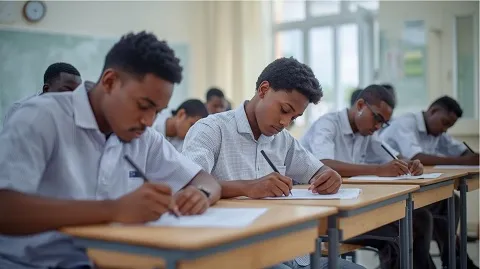
COMMERCE 1 (OBJECTIVE) — 60 QUESTIONS & ANSWERS
INSTRUCTIONS
-
Choose the option that best answers each question.
-
Time allowed: 1 hour.
OBJECTIVE QUESTIONS (1–60)
1. Commerce is mainly concerned with —
A. Production
B. Distribution
C. Consumption
D. Extraction
Answer: B
2. Retail trade involves selling goods to the —
A. Manufacturer
B. Wholesaler
C. Final consumer
D. Producer
Answer: C
3. The reward for land is —
A. Profit
B. Wages
C. Rent
D. Interest
Answer: C
4. A document issued as proof of payment is called —
A. Invoice
B. Receipt
C. Letter of enquiry
D. Quotation
Answer: B
5. Which of the following is NOT an aid to trade?
A. Transport
B. Banking
C. Insurance
D. Mining
Answer: D
6. The money paid by a debtor to show good faith is —
A. Deposit
B. Discount
C. Dividend
D. Premium
Answer: A
2026 WAEC GCE Commerce Paper 1 and 2 Questions and Answers
7. Wholesalers break bulk by —
A. Storing goods
B. Packaging goods
C. Selling goods in small quantities
D. Labeling goods
Answer: C
8. A cheque that can only be paid into a bank account is —
A. Open cheque
B. Crossed cheque
C. Bearer cheque
D. Dishonoured cheque
Answer: B
9. A list of goods shipped is known as —
A. Bill of lading
B. Consular invoice
C. Manifest
D. Delivery note
Answer: C
10. Tariffs are used to —
A. Encourage imports
B. Raise government revenue
C. Reduce savings
D. Increase inflation
Answer: B
11. Visible trade involves —
A. Services
B. Tangible goods
C. Technology
D. Communication
Answer: B
12. A partnership with more than 20 members is called —
A. Cooperative
B. Public company
C. Private company
D. Cartel
Answer: B
13. A middleman who brings buyers and sellers together is a —
A. Retailer
B. Broker
C. Factor
D. Agent
Answer: B
14. A disadvantage of advertising is that it —
A. Increases demand
B. Increases production
C. Increases price
D. Expands the market
Answer: C
15. An example of a direct tax is —
A. Import duty
B. Excise duty
C. Income tax
D. Sales tax
Answer: C
16. One major characteristic of money is —
A. Fragility
B. Durability
C. Scarcity
D. Toxicity
Answer: B
17. The Stock Exchange deals in —
A. Raw materials
B. Shares and bonds
C. Agricultural products
D. Foreign exchange
Answer: B
18. Public corporations are owned by —
A. Individuals
B. Government
C. Banks
D. Foreign investors
Answer: B
19. A document used to correct an overcharge is —
A. Debit note
B. Credit note
C. Pro forma invoice
D. Invoice
Answer: B
20. Trade between two countries is known as —
A. Home trade
B. Foreign trade
C. Invisible trade
D. Multilateral trade
Answer: B
21. A retailer who moves from place to place is called —
A. Hawker
B. Telemarketer
C. Wholesaler
D. Chain store
Answer: A
22. The repayment for the use of borrowed capital is —
A. Rent
B. Profit
C. Commission
D. Interest
Answer: D
23. A business organization formed by people with similar interests is —
A. Cooperative society
B. Private company
C. Franchise
D. Corporation
Answer: A
24. An example of an intangible asset is —
A. Building
B. Patent
C. Machinery
D. Motor vehicle
Answer: B
25. A factor that limits the size of a business is —
A. Capital
B. Manager
C. Land
D. Transport
Answer: A
26. The process of bringing goods into a country is known as —
A. Export
B. Import
C. Entrepot
D. Invisible trade
Answer: B
27. Goods sold below cost price to attract customers are called —
A. Premium goods
B. Loss leaders
C. Branded goods
D. Inferior goods
Answer: B
28. A person who buys goods in bulk and sells in small quantities is a —
A. Broker
B. Agent
C. Wholesaler
D. Retailer
Answer: D
29. The machine used for communication in offices is —
A. Fax
B. Stapler
C. Photocopier
D. Scanner
Answer: A
30. The return of goods due to defects is known as —
A. Rejection
B. Repayment
C. Refund
D. Return outwards
Answer: D
31. A situation where there is only one seller is —
A. Perfect competition
B. Monopoly
C. Oligopoly
D. Duopoly
Answer: B
32. Goods that have no alternative uses are known as —
A. Composite goods
B. Economic goods
C. Free goods
D. Single-use goods
Answer: D
33. A bonded warehouse is mainly used to store —
A. Damaged goods
B. Duty-paid goods
C. Perishable goods
D. Imported goods under customs control
Answer: D
34. A document showing ownership of goods on board a ship is —
A. Bill of lading
B. Quotation
C. Statement
D. Delivery note
Answer: A
35. A person who guarantees the repayment of a loan is called —
A. Banker
B. Debtor
C. Guarantor
D. Creditor
Answer: C
36. The term CIF means —
A. Cost, Insurance, Freight
B. Charges, Inspection, Freight
C. Cost, Import, Finance
D. Customs, Insurance, Freight
Answer: A
37. The major aim of marketing is to —
A. Increase profit only
B. Identify customer needs
C. Reduce production
D. Discourage competition
Answer: B
38. A drawback of sole proprietorship is —
A. Limited liability
B. Unlimited liability
C. Easy transfer of ownership
D. Large capital base
Answer: B
39. Which of the following is a source of short-term finance?
A. Debentures
B. Bank overdraft
C. Shares
D. Bonds
Answer: B
40. The buying and selling of goods within a country is called —
A. External trade
B. Foreign trade
C. Home trade
D. Bilateral trade
Answer: C
2026/2027 WAEC GCE Commerce Paper 1 and 2 Questions and Answers
41. Goods that spoil quickly are referred to as —
A. Composite goods
B. Perishable goods
C. Luxury goods
D. Durable goods
Answer: B
42. A business organization owned by several individuals but managed by professionals is known as —
A. Cooperative
B. Public limited company
C. Franchise
D. Sole proprietorship
Answer: B
43. The reward for entrepreneurship is —
A. Salary
B. Profit
C. Rent
D. Interest
Answer: B
44. Goods used directly to satisfy human wants are —
A. Consumer goods
B. Producer goods
C. Capital goods
D. Raw materials
Answer: A
45. The process of joining similar firms together is called —
A. Amalgamation
B. Integration
C. Specialisation
D. Diversification
Answer: A
46. A person who sells goods on behalf of another for commission is —
A. Factor
B. Retailer
C. Hawker
D. Shareholder
Answer: A
47. The excess of revenue over expenditure is —
A. Capital
B. Loss
C. Profit
D. Asset
Answer: C
48. A market where foreign currencies are traded is called —
A. Money market
B. Capital market
C. Foreign exchange market
D. Commodity market
Answer: C
49. A system where goods are exchanged for goods is —
A. Trade
B. Barter
C. Marketing
D. Commerce
Answer: B
50. The process of making goods known to the public is —
A. Leasing
B. Branding
C. Advertising
D. Packaging
Answer: C
51. Which of the following is NOT a type of warehouse?
A. Public warehouse
B. Private warehouse
C. Bonded warehouse
D. Chartered warehouse
Answer: D
52. The movement of goods from one place to another is known as —
A. Insurance
B. Banking
C. Communication
D. Transportation
Answer: D
53. Trade restrictions are imposed mainly to —
A. Encourage smuggling
B. Protect local industries
C. Increase consumption
D. Reduce exports
Answer: B
54. An agent who sells goods in his own name is a —
A. Broker
B. Factor
C. Auctioneer
D. Hawker
Answer: B
55. The insurance principle that states that the insured must suffer actual loss is —
A. Indemnity
B. Subrogation
C. Contribution
D. Proximate cause
Answer: A
56. Goods imported and then re-exported are called —
A. Entrepot
B. Dumped goods
C. Wholesale goods
D. Retail goods
Answer: A
57. A business owned and controlled by one person is —
A. Franchise
B. Sole proprietorship
C. Cooperative
D. Partnership
Answer: B
58. The money value of goods and services produced in a country is —
A. GDP
B. VAT
C. GNP
D. Debt
Answer: A
59. Banking services are mainly provided by —
A. Courts
B. Hospitals
C. Financial institutions
D. Insurance companies
Answer: C
60. The term “turnover” refers to —
A. Total profit
B. Total sales
C. Total assets
D. Total liabilities
Answer: B
COMMERCE 2 (ESSAY) — 7 QUESTIONS WITH MODEL ANSWERS
INSTRUCTIONS
Answer any 4 questions.
Each question carries 20 marks.
Write your answers in clear, coherent English.
1. Explain commerce and outline five branches of commerce.
Model Answer:
Commerce is the study of activities involved in the distribution of goods and services from producers to consumers.
Branches:
– Trade (Home & Foreign)
– Banking
– Insurance
– Transport
– Advertising
– Warehousing
– Communication
2. Describe five types of retailers.
Model Answer:
– Hawkers (move around selling goods).
– Kiosk/roadside traders (sell from small stalls).
– Departmental stores (various departments under one roof).
– Supermarkets (large self-service stores).
– Mail order businesses (sell through catalogues).
– Multiple/Chain stores (same brand, many branches).
3. What is a partnership? Explain four advantages and four disadvantages.
Advantages:
– More capital.
– Shared responsibilities.
– Simple formation.
– Better decision-making.
Disadvantages:
– Unlimited liability.
– Risk of disagreement.
– Profit sharing.
– Death of a partner may disrupt business.
4. Explain five functions of a wholesaler.
Model Answer:
– Breaking bulk
– Providing storage
– Offering credit to retailers
– Transporting goods
– Advertising support
– Price stabilization
– Market information provision
5. Discuss the functions of money.
Functions:
– Medium of exchange
– Store of value
– Unit of account
– Standard of deferred payment
– Measure of value
6. Describe the importance of insurance to business.
Importance:
– Reduces risk
– Encourages investment
– Promotes business stability
– Facilitates international trade
– Provides compensation
– Enables credit access
7. Explain the term “Stock Exchange” and state five of its functions.
Model Answer:
The Stock Exchange is a marketplace for buying and selling shares, stocks, and securities.
Functions:
– Provides liquidity
– Facilitates capital raising
– Enables investment opportunities
– Regulates quoted companies
– Facilitates economic development